
Closing the Ria of Corcubión on its southern end is Carnota, a municipality with a rich cultural, archaeological and architectural heritage. Petroglyphs, hillforts and mediaeval remains are visible throughout its territory although hórreos (raised stone granaries), without a doubt, are the best-known constructions. The municipality has around 900 catalogued hórreos and two stand out above the rest: the one in Carnota, measuring 34 metres long and 1.90 metres wide and declared a National Monument; and the structure in Lira, which with a length of 36.53 metres is the second longest hórreo in Galicia.
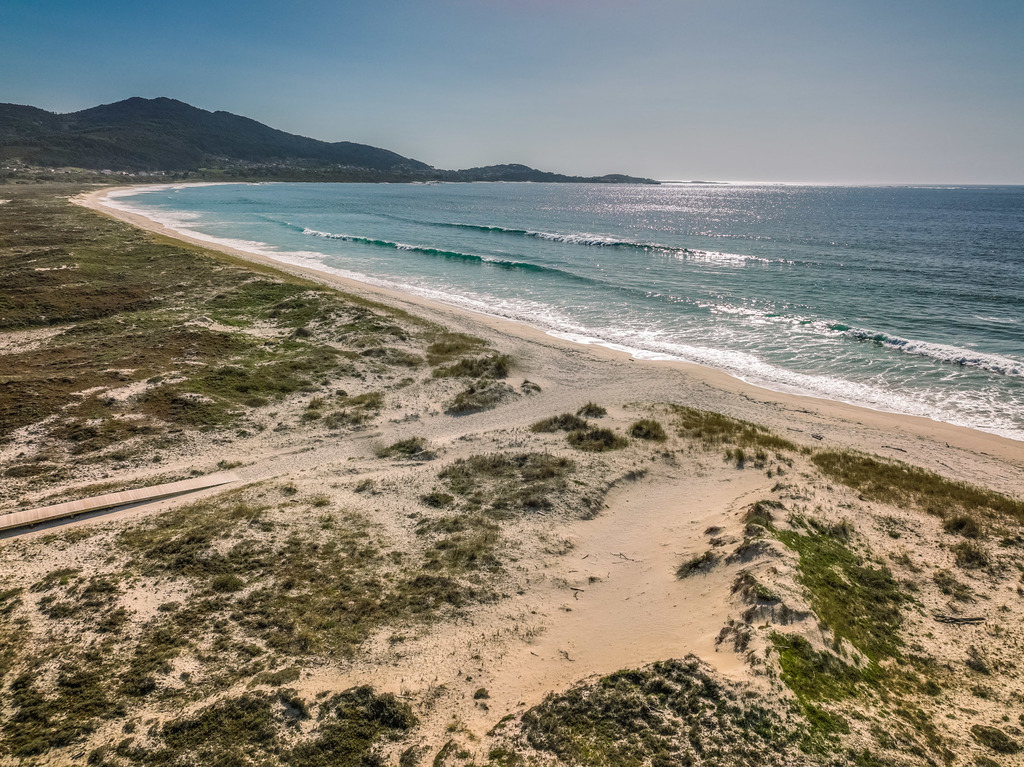
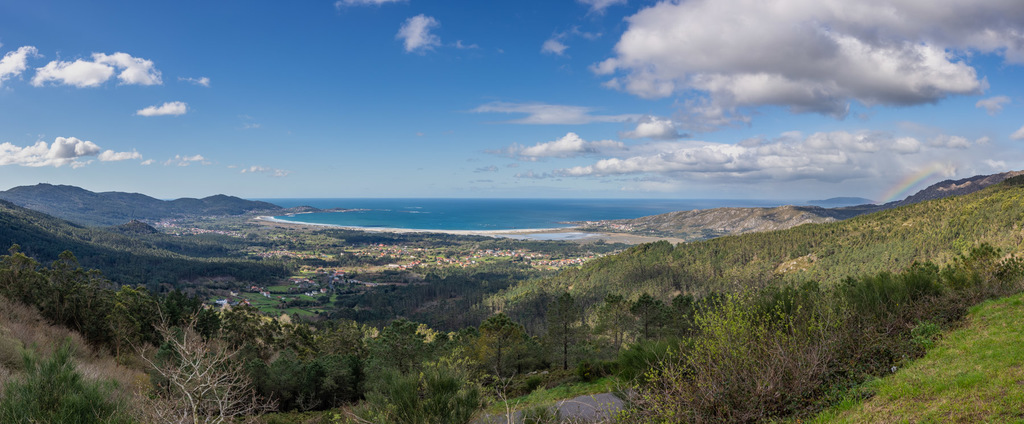
The area also has outstanding natural heritage. The Carnota Beach opens onto the Atlantic Ocean in the shape of a half-moon, forming a spectacular sandy area stretching over seven kilometres, which makes it the longest in Galicia. Its dune and marsh system complete this area of great natural and landscape value. This whole area, along with Monte Pindo, has been declared a Natura 2000 Special Area of Conservation.